

Whether you're relocating a law firm's extensive legal library, moving a corporate headquarters with executive collections, or transferring educational materials between facilities, books present unique moving challenges. They're heavy, prone to damage, and often irreplaceable. The good news? With the right approach and professional techniques, packing books for a move can be systematic, efficient, and safe.
This comprehensive guide covers everything you need to know about packing books for commercial and office relocations—from small executive office collections to entire corporate libraries. You'll learn professional methods used by experienced movers to protect books during transit, whether you're handling the packing yourself or working with a professional moving company.
Why Books Require Special Moving Considerations
Books are deceptively challenging to move for several reasons:
Weight Concentration: Books are among the heaviest items by volume. A box of books can easily exceed 50-60 pounds, making it difficult to carry and increasing the risk of box failure and injury.
Spine Vulnerability: Improper packing can damage book spines, causing permanent warping, cracking, or separation from the binding.
Page Sensitivity: Books are susceptible to moisture, tearing, and bending during transit.
Value and Irreplaceability: Many business books—legal references, signed editions, rare publications, corporate archives—are irreplaceable or prohibitively expensive to replace.
Volume Challenges: Large collections require significant box quantities and strategic planning to manage weight distribution across moving trucks.
Understanding these challenges is the first step to protecting your book collection during any move.
Step 1: Assess and Sort Your Book Collection
Before packing a single book, conduct a thorough assessment of what you're moving.
For Corporate and Office Moves:
Legal Libraries: Determine which volumes are essential vs. available digitally. Many law firms discover they can significantly reduce physical collections by transitioning to digital research platforms.
Reference Materials: Assess whether outdated editions, superseded manuals, or rarely-used references need to be moved or can be recycled.
Executive Collections: Identify valuable or sentimental books that require special handling vs. general business books.
Training Materials: Determine if older training guides, employee handbooks, or outdated materials should be purged before the move.
Archive Documents: While not technically "books," bound reports, annual reports, and archived materials often get packed similarly and should be assessed for retention requirements.
Sorting Strategy:
Keep: Books you use regularly, valuable editions, required references, legal compliance materials.
Donate: Professional books that colleagues or organizations could use, duplicates, general business books in good condition.
Recycle: Outdated materials, superseded editions, damaged books beyond repair.
Digitize: Consider scanning important but rarely-accessed materials before disposal.
Move Solutions advantage: Our teams can assist with pre-move purging and shredding of unneeded records and materials, including documented destruction certification for compliance. This pre-move assessment reduces moving costs and streamlines your new space.
Step 2: Gather Professional-Grade Packing Supplies
The right supplies make all the difference in protecting books during a move.
Essential Supplies:
Small, Sturdy Moving Boxes: This is critical. Use boxes no larger than 16" x 12" x 12" (small book boxes). Never use large boxes for books—they become impossibly heavy and are prone to failure.
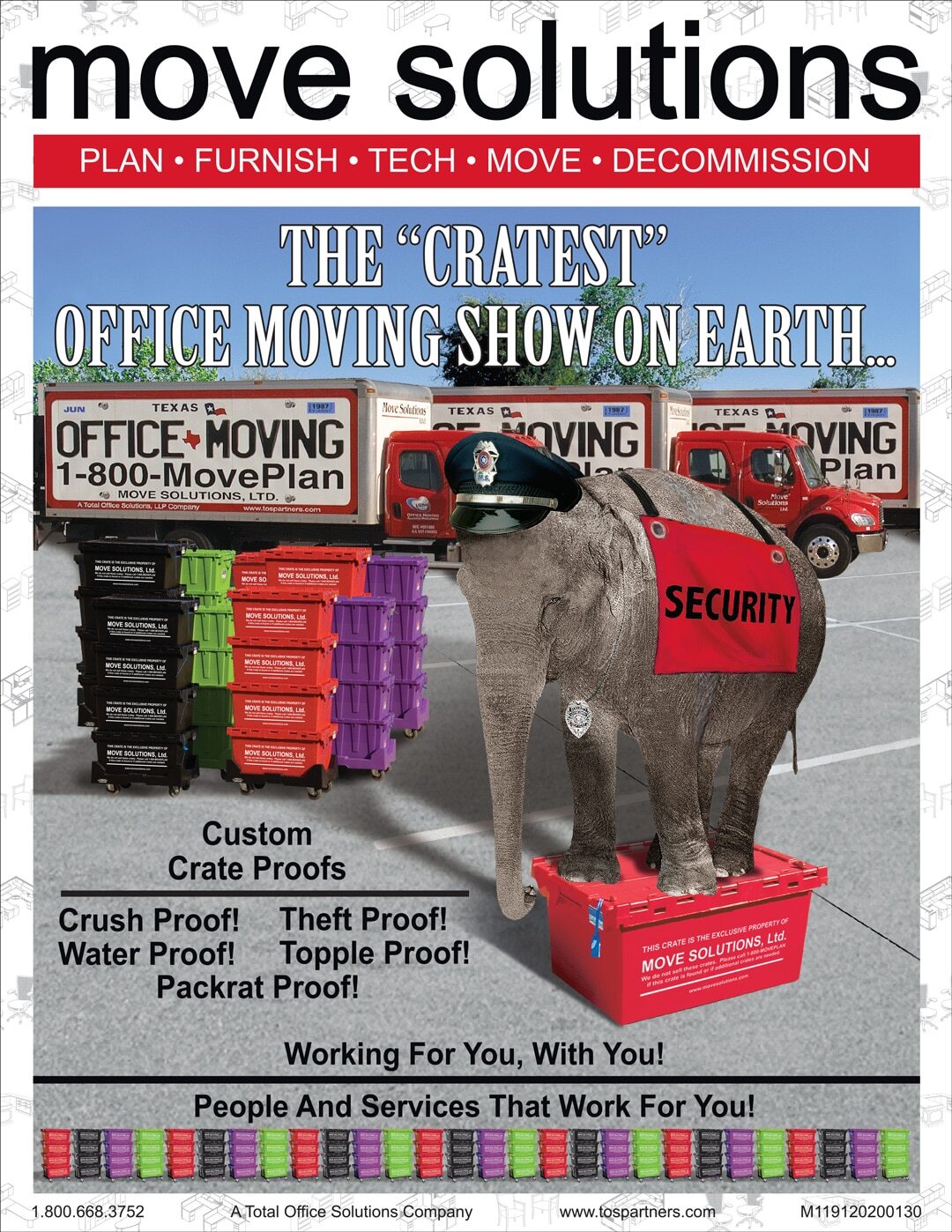
Move Solutions signature: Our red Stack-N-Pack No-Lift Crates are ideal for books. They're crush-proof, secure, stackable, and designed to handle heavy loads without failure. Unlike cardboard boxes that can collapse under weight, our crates protect books through the entire move.
High-Quality Packing Tape: Use professional-grade 2-3 inch wide tape. Reinforce box bottoms with extra tape in an "H" pattern to prevent failure under weight.
Bubble Wrap: For rare, valuable, or antique books. Provides cushioning and moisture protection.
Packing Paper: Acid-free paper for wrapping valuable books. Regular packing paper for general cushioning.
Stretch Wrap: Useful for keeping stacks of books together during the packing process.
Markers and Labels: Clearly mark boxes as "Books - Heavy," identify contents, and note destination locations.
Book Trucks or Dollies: Essential for moving heavy book boxes safely without injury.
For Valuable Collections:
Archival-Quality Materials: For rare books, first editions, or valuable collections, use archival-quality acid-free paper and boxes to prevent deterioration.
Climate-Controlled Transportation: Valuable books may require climate-controlled moving trucks to prevent damage from temperature and humidity fluctuations.
Custom Crating: Extremely valuable single volumes or small collections may warrant custom wooden crates with fitted foam inserts.
Step 3: Prepare Books for Packing
Proper preparation prevents damage during the move.
Inspection and Cleaning:
Dust Books: Remove dust and debris before packing to prevent it from transferring to other books and surfaces in your new location.
Check for Damage: Note any existing damage for insurance purposes and to avoid packing damaged books with pristine ones.
Remove Bookmarks and Loose Items: Take out bookmarks, papers, business cards, or other loose items that could damage pages or get lost.
Close Books Fully: Ensure books are fully closed before packing to prevent page damage.
Protection for Valuable Books:
Wrap Individually: Wrap rare, antique, or valuable books individually in acid-free paper or bubble wrap.
Protect Dust Jackets: Remove dust jackets from valuable hardcovers, wrap them separately, and pack them flat to prevent tearing.
Document Condition: For high-value collections, photograph books before packing for insurance documentation.
Step 4: Master the Professional Packing Methods
How you pack books significantly impacts their safety during the move. Here are the professional techniques we use at Move Solutions.
Packing Method by Book Type:
Hardcover Books (Standard Size)
Upright Packing Method:
- Stand books upright in boxes as they would sit on a bookshelf
- Pack spine facing down or alternating spines for stability
- Keep similar-sized books together to minimize shifting
- Fill to the top of the box to prevent sagging but don't overfill
- Fill gaps with crumpled packing paper to prevent movement
Why this works: This method distributes weight evenly and prevents spine damage that can occur when books are packed flat with weight on top.
Paperback Books
Flat Stacking Method:
- Stack paperbacks flat in layers
- Keep similar sizes together
- Alternate the direction of each layer (spines facing opposite directions)
- Don't stack too high—limit to 8-10 inches of books per box
- Place heaviest paperbacks on bottom, lightest on top
Why this works: Paperback spines are more vulnerable than hardcovers. Flat stacking prevents stress on bindings.
Large Format Books (Coffee Table Books, Art Books, Oversized Volumes)
Flat Packing Method:
- Always pack large books flat, never upright
- Use larger boxes, but limit to 2-3 large format books per box
- Place heaviest books on bottom
- Wrap valuable oversized books individually
- Fill remaining space with lightweight items (bubble wrap, packing paper)
- Clearly mark "Heavy" and "This Side Up"
Why this works: Large books are extremely heavy and their spines cannot support the weight of standing upright during transport.
Rare, Antique, or Collectible Books
Individual Protection Method:
- Wrap each book individually in acid-free paper or bubble wrap
- Place wrapped books in appropriately sized boxes with generous cushioning
- Never pack more than 3-4 rare books per box
- Fill all empty space with packing material to prevent shifting
- Mark boxes as "Fragile - Rare Books"
- Consider climate-controlled transportation
Why this works: Rare books require isolation from other items and maximum protection from impact, moisture, and temperature changes.
Legal References and Bound Volumes
Hybrid Method:
- Remove volumes from shelves systematically, maintaining order if needed
- Pack upright or flat depending on size
- Keep sets together in same boxes when possible
- Label boxes by section, volume numbers, or case names for easy retrieval
- Use box manifests for large legal libraries to track contents
Why this works: Legal libraries often need to be partially accessible during moves. Systematic packing and detailed labeling enable quick retrieval of specific volumes.
Comics, Magazines, and Periodicals
Flat Protected Method:
- Pack completely flat—never upright or bent
- Use comic backing boards for valuable comics
- Place in bags before packing if valuable
- Stack carefully with largest on bottom
- Fill box completely but don't overload
- Use boxes specifically sized for comics when possible
Why this works: Comics and magazines are extremely prone to bending and creasing. Flat packing with proper support prevents damage.
Step 5: Critical Weight Management
Weight management is perhaps the most important aspect of packing books professionally.
The 40-Pound Rule:
Keep individual box weight under 40 pounds. At Move Solutions, we train our teams to recognize when a box is approaching maximum safe weight.
Why 40 pounds?
- Prevents worker injury
- Reduces risk of box failure
- Ensures boxes can be carried safely by one person if needed
- Meets OSHA guidelines for manual lifting
Weight Distribution Strategies:
Fill Partially: Don't fill book boxes to the top. Half to three-quarters full is often ideal for weight management.
Mix Materials: Combine books with lighter items like office supplies, small décor, or packing materials to reach optimal box fill without excessive weight.
Use Smaller Boxes: When in doubt, use smaller boxes. You'll have more boxes to move, but each will be manageable.
Label Weight: Mark approximate weight on boxes so movers can plan their lifting approach.
Professional Lifting Techniques:
When you must move heavy book boxes yourself:
- Lift with your legs, not your back
- Hold boxes close to your body
- Test weight before committing to the lift
- Use dollies or hand trucks for any distance
- Get help for boxes over 30 pounds
- Never stack more than 2-3 book boxes when moving them
Move Solutions advantage: Our trained, experienced teams know how to handle heavy materials safely. We use appropriate equipment—dollies, hand trucks, and moving blankets—to protect both the books and our crew.
Step 6: Fill, Seal, and Label Strategically
Proper box finishing prevents disasters during transit.
Filling Gaps:
Why it matters: Books shifting during transport can damage spines and covers.
How to fill:
- Crumpled packing paper works well and is lightweight
- Bubble wrap for extra protection
- Packing peanuts (though these can be messy)
- Rolled towels or soft goods can fill large gaps
The shake test: Gently shake the sealed box. If you hear significant movement, add more cushioning material.
Sealing Boxes:
Bottom Reinforcement: Apply tape in an "H" pattern on box bottoms:
- One strip along the center seam
- Two strips perpendicular to the first, across the box width
- This prevents box failure under heavy weight
Top Sealing: Apply tape across the top seam and both edges where flaps meet.
Edge Reinforcement: For very heavy boxes, run tape along all vertical box edges.
Labeling for Success:
Clear labeling is essential, especially for commercial moves where books need to reach specific offices, departments, or shelves.
Essential Label Information:
- "Books - Heavy" or specific weight
- Room/office destination ("Executive Office 401" or "Law Library - East Wing")
- Fragile warnings if applicable
- Contents summary ("Tax Law Reference" or "Marketing Books")
- Box numbers for tracking (Box 1 of 45)
- "This Side Up" if books are packed in a specific orientation
Move Solutions tracking: Our BrassTacks™ software creates detailed inventory lists and tracking labels for boxes. You'll know exactly where every box of books is throughout your move, and boxes will be delivered to the correct locations in your new space.
Step 7: Special Considerations for Large Collections
Moving an entire corporate library, law library, or extensive book collection requires additional planning.
Pre-Move Planning:
Inventory Your Collection: Document what you have, especially for insurance purposes. Photograph rare or valuable sections.
Create a Shelving Plan: Map out where books will go in the new location. This informs labeling and unpacking strategy.
Coordinate With IT: If integrating library management software or RFID systems, plan the technical setup to align with the physical move.
Schedule Appropriately: Large book collections take significant time to pack and unpack. Build adequate time into your move schedule.
Consider Professional Library Movers: For specialized collections, law libraries, or archives, specialized packing and handling make a difference.
Maintaining Organization:
Color-Coded Labels: Use colored labels or markers to designate different sections (blue for fiction, red for reference, green for legal, etc.).
Shelf-Order Packing: For libraries that must maintain shelf order, pack books in order and label boxes sequentially.
Create Box Manifests: List contents of each box, especially for research libraries or legal collections where specific volumes may be needed quickly.
Photograph Shelves: Take photos of shelves before packing to remember the exact organization.
Climate Control Considerations:
Why it matters: Books are vulnerable to:
- High humidity (mold, mildew, warping)
- Low humidity (brittleness, cracking)
- Temperature extremes (adhesive failure, warping)
When to use climate control:
- Valuable or rare book collections
- Leather-bound volumes
- Antique books
- Long-term storage situations
- Moves during extreme weather
Move Solutions capability: We can arrange climate-controlled transportation for valuable collections that require environmental protection.
Step 8: Loading and Transportation Best Practices
How books are loaded onto the truck impacts their safety during transit.
Loading Strategy:
Bottom Layer: Book boxes should typically go on the bottom layer of the truck due to their weight and density. They create a stable foundation.
Stack Carefully: Stack book boxes no more than 3-4 high to prevent crushing bottom boxes.
Secure Stacks: Use moving blankets and straps to secure stacks and prevent shifting during transport.
Weight Distribution: Distribute heavy book boxes throughout the truck to maintain balance, rather than concentrating them in one area.
Accessibility: If certain books will be needed immediately upon arrival, load those boxes last (so they come off first).
During Transport:
Avoid Extreme Conditions: Don't leave book-packed trucks in direct sunlight or extreme cold for extended periods.
Secure Properly: Ensure boxes cannot shift, slide, or fall during transport.
Monitor Climate: For valuable collections, use climate-controlled trucks and monitor conditions during transport.
Move Solutions advantage: Our experienced teams know how to load trucks for optimal weight distribution and cargo protection. Our owned fleet means consistent quality and careful handling throughout transportation.
Step 9: Unpacking Books Strategically
Unpacking is just as important as packing.
Unpacking Strategy:
Unpack in Stages: Don't feel pressure to unpack all books immediately. Start with essential references and frequently used materials.
Follow Your Plan: Use your pre-move shelving plan to place books in their designated locations.
Inspect for Damage: Check books as you unpack. Document any damage for insurance claims.
Clean Shelves First: Ensure shelves are clean, stable, and properly installed before loading them with heavy books.
Dispose of Packing Materials: Have a plan for removing empty boxes and packing materials as you unpack.
For Large Collections:
Systematic Approach: Unpack and shelve section by section rather than opening all boxes at once.
Team Coordination: For law libraries or corporate libraries, coordinate with library staff or designated organizers who know the classification system.
Quality Check: Verify that all boxes arrived and nothing is missing.
Common Book Packing Mistakes to Avoid
Learn from common errors we've seen over 35 years:
❌ Using Large Boxes: This is the #1 mistake. Large boxes become dangerously heavy and often fail.
❌ Packing Books Spine-Up: This stresses spines and can cause permanent damage.
❌ Overfilling Boxes: Boxes that are too heavy are unsafe and prone to failure.
❌ Insufficient Cushioning: Books shifting during transport leads to damage.
❌ Poor Labeling: Unlabeled or poorly labeled boxes create chaos during unpacking.
❌ Packing Large Books Upright: Heavy, oversized books should always be packed flat.
❌ Mixing Books with Fragile Items: Books are heavy and dense—they can damage other items.
❌ Ignoring Moisture Protection: Books packed in damp conditions or moved during rain without protection can be ruined.
❌ Not Testing Box Weight: Always test weight before sealing and moving boxes.
❌ Leaving Loose Items in Books: Bookmarks, papers, and other items can damage pages during transit.
Creative Packing Solutions for Books
Professional movers develop clever techniques for efficient book moving:
Use Rolling Luggage:
Pack heavy books in wheeled suitcases to eliminate lifting. This is especially useful for executive offices with smaller collections.
Utilize Filing Cabinets:
If moving filing cabinets that will be empty anyway, pack books in the drawers. Just ensure the total weight remains manageable.
Book Trucks as Packing Units:
For library moves, load books onto library book carts, wrap the entire cart in stretch wrap, and move the carts as units. Unpack directly onto shelves at the destination.
Milk Crates:
Sturdy plastic milk crates are excellent for books—they're the perfect size, have handles, and are very durable.
Wardrobe Boxes for Oversized Books:
While expensive, wardrobe boxes can be excellent for very large, valuable art books when laid flat with proper cushioning.
When to Hire Professional Help
While many people can pack their own books, there are situations where professional assistance makes sense:
Consider Professional Packing for:
Large Collections: Law libraries, corporate libraries, or personal collections of 1,000+ volumes benefit from professional efficiency and systematic approach.
Valuable Collections: Rare books, first editions, signed copies, and antique books warrant professional handling and insurance coverage.
Time Constraints: If your move timeline is tight, professionals can pack books far more quickly than DIY efforts.
Physical Limitations: Heavy book boxes can cause injury if you're not accustomed to the weight or don't have proper equipment.
Complex Moves: If books need to be moved across the country, internationally, or into high-rise buildings with complicated access, professionals navigate these challenges daily.
Specialized Materials: Archives, manuscripts, and historical documents require specialized packing knowledge.
The Move Solutions Approach to Book Moving:
When you work with Move Solutions for your office or commercial relocation, our book packing service includes:
Trained Teams: Our W2 employed, background-checked crews are trained in proper book handling and packing techniques.
Professional Materials: We provide our signature Stack-N-Pack No-Lift Crates and professional packing supplies.
Systematic Process: Our BrassTacks™ software tracks every box, creating detailed inventories and ensuring nothing is lost.
Proper Equipment: We use book trucks, dollies, and appropriate equipment to move heavy book boxes safely.
Insurance Protection: Comprehensive insurance coverage protects your collection throughout the move.
Coordinated Delivery: Books arrive at the correct offices, shelves, or storage areas in your new location.
White-Glove Service: For executive offices and valuable collections, we provide extra care and attention.
Book Storage Considerations
If you're not moving books to a new permanent location immediately, proper storage is essential.
Short-Term Storage:
Climate Control: Essential for any storage period longer than a few weeks.
Elevation: Store boxes off the ground to protect from moisture and potential flooding.
Accessibility: Stack boxes logically so you can access needed volumes without unstacking everything.
Documentation: Maintain detailed lists of what's in storage and where.
Long-Term Storage:
Professional Facilities: Use climate-controlled storage facilities designed for sensitive materials.
Archival Boxes: Transfer books to archival-quality boxes for long-term storage.
Regular Inspection: Check stored books periodically for signs of moisture, pests, or deterioration.
Insurance: Ensure stored collections are properly insured.
Sustainability and Book Disposal
Moving is an excellent opportunity to evaluate your book collection and dispose of unneeded materials responsibly.
Donation Options:
- Local libraries (often accept business and reference books)
- Schools and universities
- Nonprofit organizations
- Prison libraries
- Little Free Libraries in your community
- Corporate learning centers at other companies
Recycling:
Books that are damaged, outdated, or unusable can often be recycled. Check with your local recycling center for book-specific programs.
Selling:
- Online marketplaces for valuable business books
- Used bookstores that buy reference materials
- Professional liquidation services for large collections
Move Solutions service: We provide shredding and disposal services for books and materials that contain confidential or sensitive information, including documented destruction certification for compliance.
The Bottom Line: Protect Your Book Investment
Books represent knowledge, reference materials, legal requirements, and often significant financial investment. Proper packing protects this investment and ensures your collection arrives safely at your new location.
Whether you're moving a small executive office with a modest collection or relocating an entire corporate library with thousands of volumes, the principles remain the same:
✅ Use small, sturdy boxes or professional moving crates ✅ Pack books appropriately for their type and size ✅ Manage weight carefully to prevent injury and box failure ✅ Fill gaps to prevent shifting during transport ✅ Label clearly for easy identification and unpacking ✅ Handle rare and valuable books with extra care ✅ Use professional help when the scope, value, or complexity warrants it
Move Your Books with Confidence
At Move Solutions, we've spent 35 years perfecting the art and science of moving businesses—including their books, libraries, and archives. Our tech-enabled processes, experienced teams, and commitment to zero damage ensure your books receive the protection they deserve.
Whether you need full-service packing for an entire corporate library or just want professional advice on handling a specialized collection, we're here to help.
Ready to discuss your move?
Get a quote today for your office or commercial relocation. We'll take care of your books—and everything else—so you can focus on what matters: running your business in your new location.
For over 35 years, thousands of clients have trusted Move Solutions to take them out of business and put them back in business—on schedule, with everything intact. Let us earn your trust too.