

150,000+
Up To 50%
100%
A Crate That Changed The Industry
We Engineered Our Way Out Of The Cardboard Problem.
Commercial moving ran on cardboard for decades. Single-use boxes assembled, packed, loaded, and crushed into a dumpster within days. Across thousands of office relocations, that volume adds up to a staggering amount of landfill material.
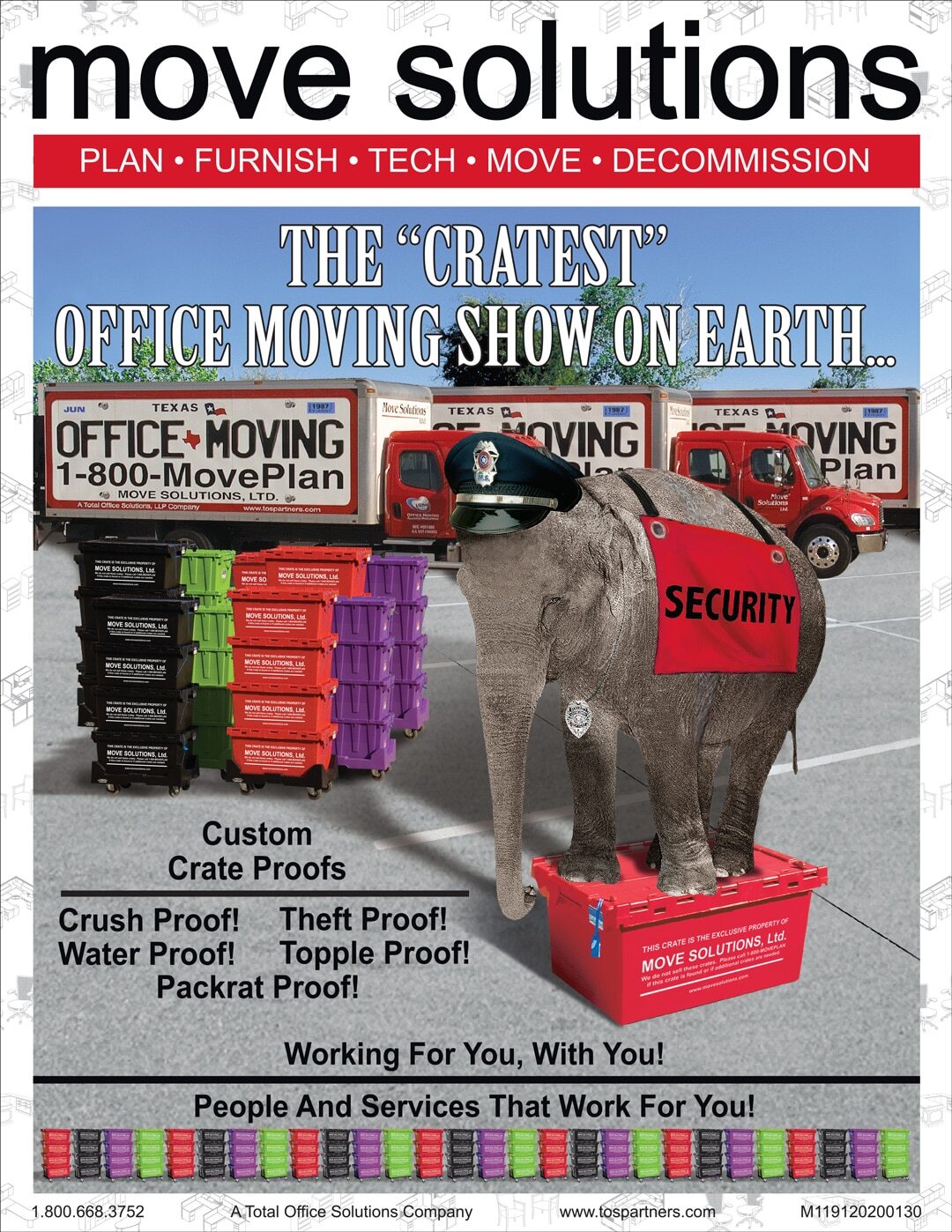
Move Solutions developed the Stack-N-Pack, No-Lift Crate as a direct response to that problem. Every crate is crush-proof, secure, and stackable. Each one is RFID-tagged so it gets recovered, cleaned, and recirculated after every job. One crate serves hundreds of moves before it ever needs to be replaced.
How We Approach Every Project
How We Reduce Waste On Every Project.
Sustainability isn't added on at the end of a project. It's structured into how we schedule, how we operate on-site, and how we handle everything that comes out of a space. These three practices run across every project, every time.
Authorized Recycling Streams.
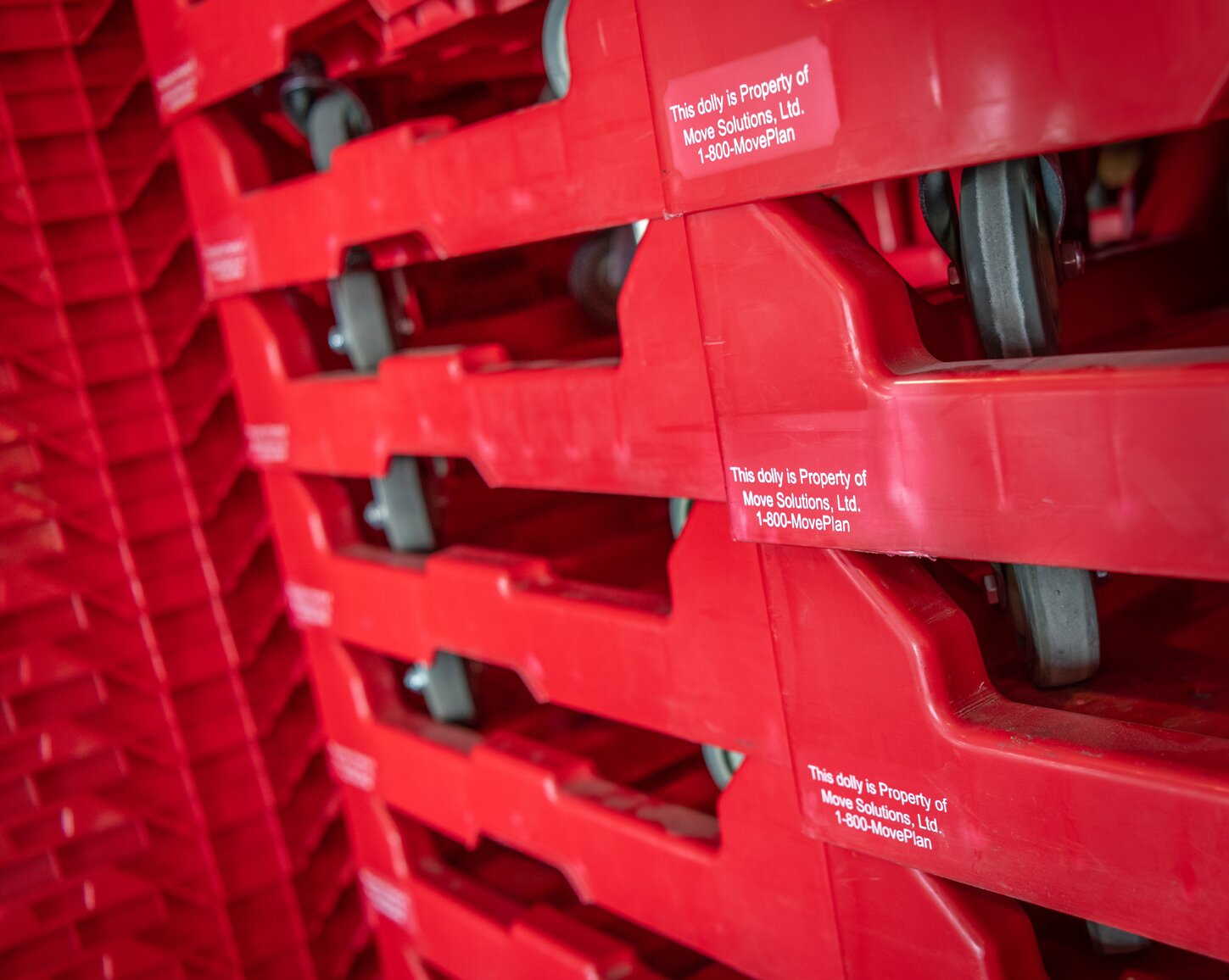
Metal, plastic, wood, fabric, and electronics all have designated recovery channels. Materials that can be diverted from a landfill are. Nothing gets hauled off to a generic dumpster and counted as handled.
Your Charity, Your Call.
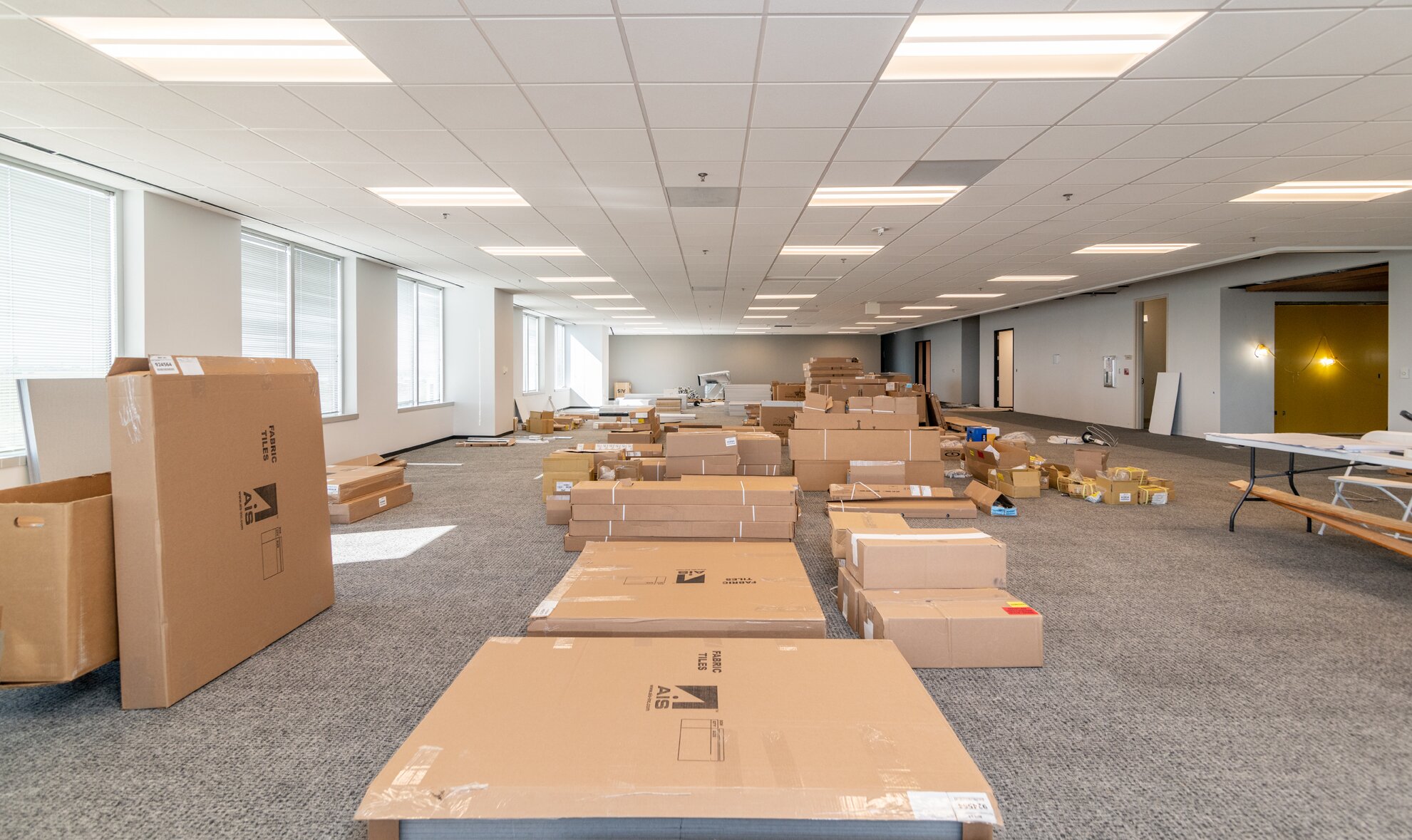
Functional furniture and equipment still has value in the community. We coordinate direct donations to the nonprofit or organization you choose. You pick the recipient, we handle the logistics, and you get the documentation to match.
On-Site Rhino Compaction.
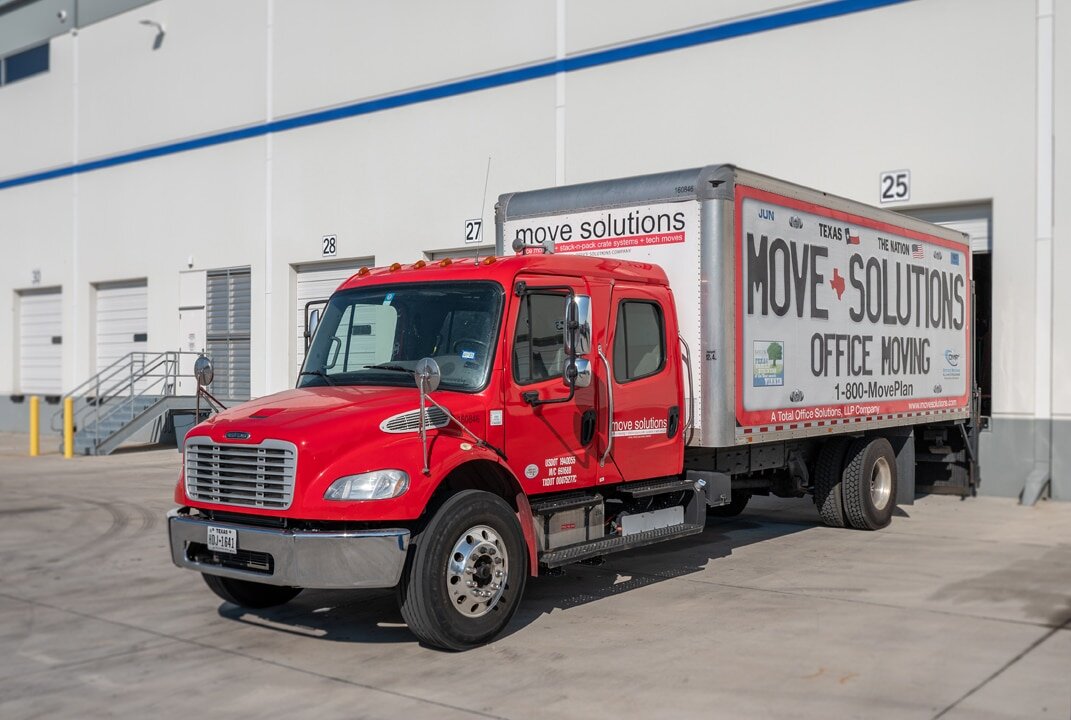
For waste that has no other recovery path, our Rhino compaction trucks crush it on-site before transport. That single step reduces landfill volume by up to 50% compared to conventional waste hauling.
Inside Our Own Four Walls
How We Run Our Operations.
The same standards we apply on client projects run inside our own facilities. These practices aren't marketing language. They're how we manage equipment, energy, and assets day to day.
Energy-Aware Workstations.
Application monitoring tracks resource consumption across our systems and powers down equipment when it goes idle. We're not running machines overnight on jobs that finished in the afternoon.
Responsible End-Of-Life Computing.
When our own hardware reaches retirement, it goes through the same certified channel we use for client equipment. CPUs and monitors are disassembled and processed. Nothing in our own fleet quietly ends up in a skip.
RFID Crate Recovery System.
Every crate in our 150,000-unit fleet carries an RFID tag. That tracking system is what allows us to recover units from client sites rather than writing them off as lost. Fewer replacements needed means less new plastic produced.
Certified Partners Within The Same Family
TechTeam Solutions Handles What Moves Can't.
Relocations often surface data-bearing equipment, printed records, and technology assets that require certified handling. TechTeam Solutions is part of the same family of companies as Move Solutions, built on the same ownership, leadership, and accountability structures. When the move is done, the disposition of sensitive assets stays in the same hands you hired at the start.
A Trusted Name In The Same Family
Certified Data Destruction And Tech Recycling.
Data doesn't disappear just because equipment leaves a building. TechTeam Solutions provides supervised destruction with a full chain of custody and a Certificate of Destruction and Recycling issued at project close. Every drive gets shredded. Every corporate identifier and asset tag is removed before equipment moves.
Recoverable components re-enter the supply chain through R2 Certified processing. What can't be recovered is handled in compliance with environmental regulations, documented, and reported.
NAID AAA Certified
R2 Certified
100% Recycling
Common Questions
What Most Clients Ask About Sustainability.
How do you handle leftover items after a move or decommission?
It depends on the condition and category of material. Furniture and equipment in working condition typically gets donated or resold. Items without a reuse path go to recycling streams sorted by material type. Only what genuinely cannot be diverted ends up in landfill, and we document the breakdown in your project closeout so you know exactly what went where.
Do I get to decide which organization receives donated items?
Yes. You name the recipient, we coordinate the delivery and documentation. If you'd like a suggestion, we have working relationships with regional nonprofits that regularly accept commercial office furniture and equipment in various conditions. Either way, you receive written confirmation of the donation for your records.
What certifications cover your data destruction and e-waste services?
TechTeam Solutions, the data and technology arm of our family of companies, holds NAID AAA Certification for hard drive destruction and R2 Certification for electronics recycling. Every project that touches sensitive media results in a Certificate of Destruction and Recycling documenting what was processed, how, and where materials went afterward.
How much material actually gets kept out of the landfill?
The exact figure varies by project, but on-site compaction alone cuts landfill volume by up to 50%. Layer in the donation and recycling channels and the majority of material from a typical commercial relocation or decommission never reaches disposal. Diversion rates are tracked and can be included in your project closeout documentation.
Why are reusable crates genuinely better than cardboard boxes?
A single crate handles hundreds of projects across its lifetime. A cardboard box gets one move, sometimes two. Beyond the environmental math, reusable crates are crush-proof, lockable, and designed to stack without shifting, which means less product damage and faster loading. The environmental benefit and the operational benefit point in the same direction.
Does a sustainability-focused approach cost more?
Generally, no. The crate system, the recycling infrastructure, and the donation coordination are part of how we operate, not premium add-ons. In decommission work especially, resale and donation value from exiting assets can offset a portion of the project cost. When there are incremental costs for certified destruction or specialty recycling, those are line-itemed clearly in your proposal so there are no surprises.
Can you support clients with formal ESG or sustainability reporting requirements?
Yes. A substantial share of our work runs through enterprise accounts and national clients with active ESG programs. We coordinate with internal sustainability teams, procurement, and facilities to produce the diversion data, donation documentation, and chain-of-custody records those programs require. Share your reporting framework early and we'll structure deliverables to match.
What happens to materials that can't be recycled through standard channels?
For materials outside standard municipal or commercial recycling, we work through certified regional specialists who handle those streams. Foam, certain composites, and specialty electronics often need processing that goes beyond what local channels accept. If a material has no viable recovery path, that's documented in the project closeout, so the diversion data we report is accurate rather than inflated.
Can Move Solutions provide sustainability documentation for our corporate records?
Yes. Project documentation at close can include material diversion rates by category, donation recipient confirmation, recycling stream summaries, and Certificates of Destruction for any data-bearing media. If your team uses a specific reporting template, share it during project planning and we'll align our deliverables to fit it.